FFacts On Tap Editorial Team Fact-checkedUpdated June 27, 20233 min read
Share
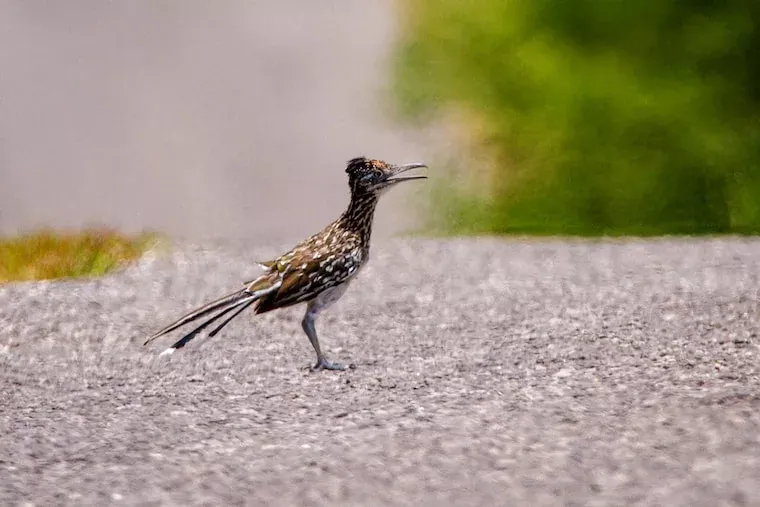
Roadrunners are one of the desert Southwest's most recognizable birds, famous for sprinting across the sand with a spiky crest and a tail held out like a rudder. But there's more to these birds than their cartoon reputation.
Here are 20 verified facts about roadrunners, covering their biology, hunting habits, family life, and place in culture.
Roadrunners belong to the cuckoo family (Cuculidae) and are also known as chaparral birds or ground cuckoos.
They have a distinctive look: a long tail, a shaggy crest, and a bare patch of blue-and-orange skin behind the eye.
A greater roadrunner is about 20 to 24 inches long and can weigh up to 1.5 pounds.
Roadrunners are fast on foot and can reach speeds of roughly 20 miles per hour, with some individuals reported at up to 26 mph.
They are skilled hunters that eat a wide variety of prey, including insects, lizards, snakes, rodents, and small birds.
Roadrunners chase prey on foot and dispatch it by grabbing and repeatedly slamming it against the ground or a rock.
Roadrunners are known to kill and eat venomous snakes, including small rattlesnakes, though this is a risky and less common part of their diet.
They live primarily in desert and scrubland areas of the southwestern United States and Mexico, well adapted to hot, dry climates.
To cool off, roadrunners pant and use gular fluttering, rapidly vibrating throat muscles to release heat.
Roadrunners are largely monogamous, often pairing with the same mate across breeding seasons.
They build nests low in shrubs, cacti, or small trees using sticks, and often line them with grass, feathers, snakeskin, or dung.
A female typically lays two to six eggs per clutch, and both parents share incubation duties.
Roadrunner chicks hatch nearly naked with dark skin and closed eyes; feathers grow in over the following days, and chicks can leave the nest around 18 days after hatching.
Roadrunners are year-round residents that do not migrate.
They are territorial birds that defend their home range from rivals and predators.
Roadrunners communicate with a range of calls, including a descending coo, clattering bill snaps, and clucking sounds.
In the wild, roadrunners typically live seven to eight years; in captivity they can live considerably longer.
Roadrunners hold a place in Southwestern and Native American folklore, often associated with speed, cleverness, and protection.
The greater roadrunner is the official state bird of New Mexico.
Warner Bros.' cartoon Road Runner made the bird a lasting pop-culture icon, even though the real animal doesn't say 'beep beep.'
Frequently asked questions
What is the difference between a roadrunner and a cuckoo bird?
Roadrunners are members of the cuckoo family, but unlike most cuckoos they are primarily ground-dwelling and built for running rather than flying, which is why they're sometimes called ground cuckoos.
How fast can a roadrunner run?
Greater roadrunners typically run around 20 miles per hour, with occasional reports of individuals reaching up to 26 mph in short bursts.
What do roadrunners eat?
Roadrunners are carnivorous and eat insects, lizards, snakes (including small rattlesnakes), rodents, and small birds.
Where do roadrunners live?
Roadrunners live in desert and scrubland habitats across the southwestern United States and Mexico.
Are roadrunners endangered?
No, roadrunners are not currently considered endangered, though habitat loss can affect local populations.
What is the lifespan of a roadrunner?
Roadrunners typically live seven to eight years in the wild and can live considerably longer in captivity.
We write every article to be genuinely fun — and genuinely true. Each fact is checked against reputable sources before it goes live. Spotted something off? Tell us and read our fact-check policy.