FFacts On Tap Editorial Team Fact-checkedUpdated September 3, 20233 min read
Share
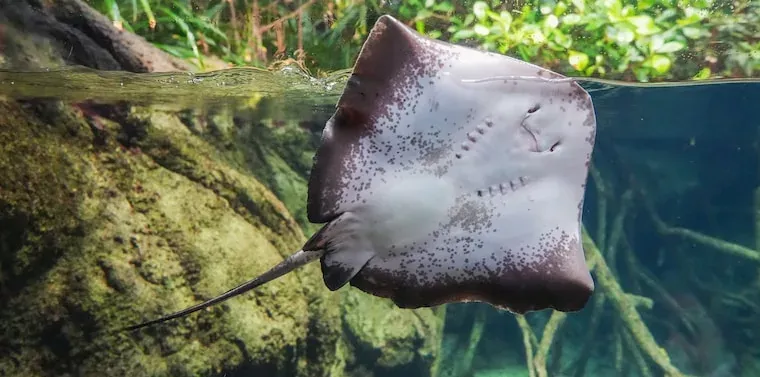
Rays are flattened, cartilaginous fish closely related to sharks, gliding through every ocean on Earth from shallow reefs to the open sea. Calm and graceful, they're a favorite sight for divers and snorkelers.
Here are some verified facts about these remarkable creatures, from their ancient lineage to their unusual way of breathing.
There are well over 600 known species of rays, grouped into more than 25 families.
Rays and sharks both belong to the class Chondrichthyes (cartilaginous fishes), with rays forming their own group called Batoidea.
Rays have a skeleton made of cartilage rather than bone, which makes them lighter and more flexible than bony fish.
Depending on the species, rays reproduce in different ways: some lay eggs (oviparous), some hatch eggs inside the body before birth (ovoviviparous), and others give birth to live young nourished directly by the mother (viviparous).
Manta rays are thought to live at least 40 to 50 years in the wild, making them one of the longer-lived fish species.
The giant oceanic manta ray is the largest ray species, with most adults reaching a wingspan of up to about 23 feet (7 meters); a few exceptionally large individuals have been reported even larger.
Stingrays have one or more venomous barbed spines near the base of their tail, used purely for self-defense rather than hunting.
Most rays are solitary, but some species, including manta rays and eagle rays, gather in large schools, sometimes numbering in the hundreds.
Many bottom-dwelling rays breathe by drawing water in through spiracles on top of their head and pushing it out through their gills, letting them breathe while buried in sand.
Rays help keep ocean ecosystems balanced by controlling populations of the clams, oysters, and other invertebrates they prey on.
In bottom-dwelling species like stingrays and skates, the eyes sit on top of the head while the mouth is on the underside, an adaptation suited to feeding on the seafloor while staying alert to danger from above.
Many ray species are targeted for their meat, skin, and gill plates, and populations of several species have declined sharply as a result.
Manta rays have no venomous spine at all and are considered harmless to humans, feeding entirely on tiny plankton and small fish filtered from the water.
Electric rays can generate a strong electric shock, sometimes over 200 volts, using specialized organs to stun prey or deter predators.
Frequently asked questions
What do rays eat?
Most rays feed on small fish, crustaceans, and mollusks found on or near the seafloor. Filter-feeding species like manta rays eat plankton and tiny fish they strain from the water.
Are rays dangerous to humans?
Rays are generally not aggressive and will only use their venomous spine in self-defense if stepped on or threatened, which can cause a painful injury. Manta rays have no spine and pose no sting risk at all.
What is the difference between a ray and a skate?
Skates and rays are closely related, but skates lay egg cases and lack a venomous spine, instead having a thicker, fleshier tail with small thorns. Most rays either give birth to live young or hatch eggs internally, and many have a whip-like tail tipped with a venomous barb.
How do rays reproduce?
Rays reproduce in one of three ways: laying eggs outside the body (oviparous), hatching eggs inside the mother before birth (ovoviviparous), or giving birth to live young nourished directly through the mother (viviparous).
Why are rays important to the ocean ecosystem?
Rays help regulate populations of the invertebrates and small fish they eat, such as clams and oysters, which supports a healthy balance throughout the marine food web.
Do rays have any predators?
Yes, rays are preyed on by large sharks, and some are also taken by sea lions, other marine mammals, and large predatory fish.
We write every article to be genuinely fun — and genuinely true. Each fact is checked against reputable sources before it goes live. Spotted something off? Tell us and read our fact-check policy.