FFacts On Tap Editorial Team Fact-checkedUpdated February 13, 20264 min read
Share
Porcupines are among the most recognizable rodents on the planet, thanks to the thousands of sharp quills covering their bodies. But there's a lot more to these slow-moving, tree-climbing herbivores than their famous spines.
Here are some genuinely verified facts about porcupines, from their surprising size to their unusual defense mechanism.
Porcupines are the third-largest rodents in the world, behind only the capybara and the North American beaver.
There are close to 30 known porcupine species, split between Old World porcupines (Africa and Asia) and New World porcupines (the Americas).
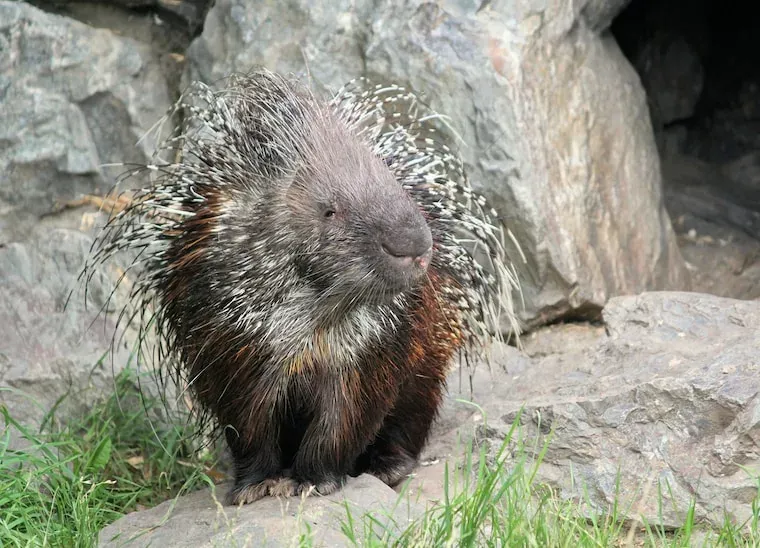
The African crested porcupine, not the North American porcupine, is actually the largest porcupine species in the world, weighing up to about 60 pounds (27 kg).
The North American porcupine is the largest rodent native to North America and one of the most widely recognized porcupine species.
Porcupines are herbivores that primarily eat leaves, bark, stems, and other plant material.
Porcupines are mostly nocturnal, meaning they are active at night and rest during the day.
North American porcupines are skilled climbers and spend much of their time in trees, gripping bark with long curved claws.
A porcupine's quills are modified hairs that are sharp and barbed, and they detach easily from the body when touched or when the porcupine flicks its tail.
A single porcupine can have around 30,000 quills covering its body.
Porcupines cannot shoot their quills. Instead, the quills release on contact, and porcupines can also raise and lower them as a warning display.
Porcupines are slow-moving on the ground, generally waddling along at only a couple of miles per hour.
Porcupines have relatively poor eyesight but compensate with a strong sense of smell and hearing.
Porcupines are largely solitary animals, though North American porcupines may den together in winter and pairs come together to breed.
A female North American porcupine has a gestation period of roughly seven months, one of the longest of any rodent, and usually gives birth to a single offspring.
Baby porcupines, called porcupettes, are born with soft quills that harden within about a week of birth.
Porcupines typically live around 5 to 7 years in the wild, but can live considerably longer in captivity.
Porcupines are known to gnaw on salt-coated objects such as tool handles, boots, and even car tires or brake lines, because they crave sodium.
Most porcupine species are not currently endangered, though some, like Africa's Cape porcupine and several Old World species, face pressure from habitat loss and hunting.
Porcupines can carry diseases such as rabies, so wildlife experts recommend observing them from a distance rather than approaching.
Porcupine quills have long been used decoratively by Indigenous peoples in North America, who wove them into intricate quillwork on clothing and baskets.
By feeding on bark and vegetation, porcupines can influence plant growth patterns and play a role in shaping forest ecosystems.
A porcupine's quills naturally regrow after being lost, similar to hair.
The word 'porcupine' comes from the Old French/Latin for 'spiny pig' or 'quill pig,' even though porcupines are rodents, not pigs.
Frequently asked questions
What is the purpose of porcupine quills?
Quills are modified hairs that act as a defense against predators. When threatened, a porcupine raises its quills and may back into or swat at a predator, causing the barbed quills to detach and lodge in the attacker.
Can porcupines shoot their quills?
No. This is a common myth. Porcupine quills detach easily on contact, which can make it look like they were fired, but porcupines have no mechanism to launch them through the air.
Are porcupines dangerous to humans?
Porcupines are not aggressive and will avoid humans when possible, but their quills can cause painful injuries if touched, and they can carry diseases such as rabies. It's best to observe them from a distance.
Do porcupines make good pets?
Porcupines are wild animals that require specialized care, diet, and enclosures, and in many places it's illegal to keep them without a permit. They are not recommended as pets for most people.
What is the lifespan of a porcupine?
Wild porcupines typically live around 5 to 7 years, while those in captivity can live considerably longer with consistent food and no predators.
What should you do if you encounter a porcupine?
Keep your distance, avoid startling it, and never try to touch or corner it. If a porcupine is causing property damage, contact a local wildlife control service rather than handling it yourself.
We write every article to be genuinely fun — and genuinely true. Each fact is checked against reputable sources before it goes live. Spotted something off? Tell us and read our fact-check policy.