FFacts On Tap Editorial Team Fact-checkedUpdated March 4, 20264 min read
Share
Turtles are among the oldest reptile lineages on Earth, with a fossil record stretching back over 200 million years. Found in oceans, rivers, ponds, and on land across nearly every continent, these shelled survivors have outlasted the dinosaurs and adapted to an astonishing range of habitats.
From tiny tortoises that fit in your palm to sea giants weighing over a ton, here are the real, verified facts behind the shell.
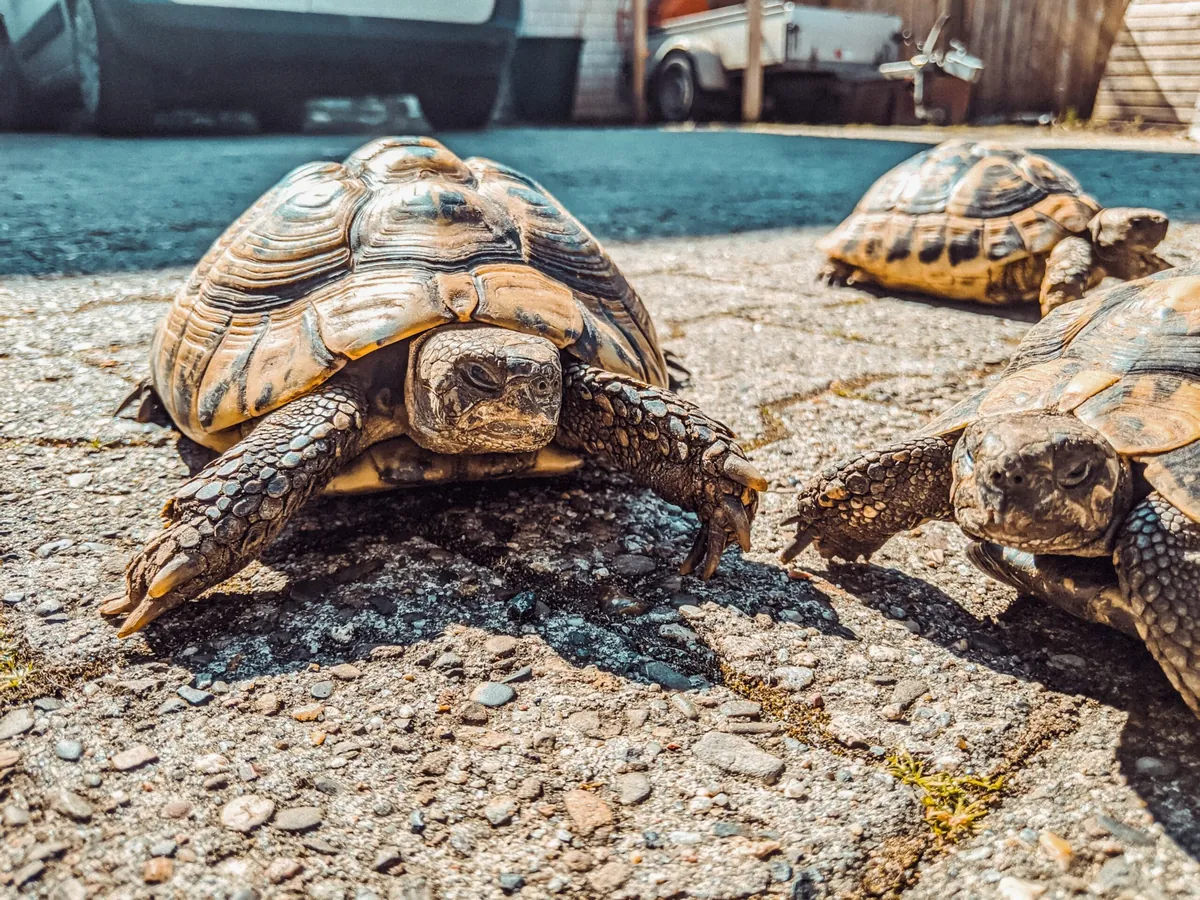
Turtles are reptiles protected by a hard, bony shell that is fused to their spine and ribs.
A turtle's shell has two main parts: the carapace on top and the plastron on the bottom.
Turtles are cold-blooded (ectothermic), so their body temperature depends on their surroundings, which is why they bask in the sun to warm up.
Many turtle species can retract their head and limbs into their shell for protection, though sea turtles cannot.
The leatherback sea turtle is the largest living turtle species; the biggest one ever recorded weighed about 2,120 pounds and measured over 9 feet long.
Some giant tortoises live well over 100 years, and a Seychelles giant tortoise named Jonathan is verified at around 193 years old, the oldest known living land animal.
Turtles are strong swimmers, and sea turtles can hold their breath for hours while resting, though they must surface regularly to breathe air.
Turtles have good eyesight and can see in color, which helps them find food and recognize mates.
Most turtles are omnivores, eating a mix of plants and small animals, though diets vary widely by species.
Turtles play an important ecological role, helping control insect and plant populations and serving as a food source in many food webs.
Turtles and tortoises have appeared in art and mythology across many cultures, including ancient Egyptian and Chinese symbolism.
Female turtles lay their eggs in nests dug on land, and the eggs typically hatch after two to three months depending on species and temperature.
In many turtle species, the temperature of the nest determines hatchling sex: warmer nests tend to produce more females, cooler nests more males.
Sea turtles can navigate thousands of miles across open ocean by sensing the Earth's magnetic field.
The speckled padloper, found in South Africa, is the world's smallest tortoise, with adults measuring only about 3 to 4 inches long.
Turtles can detect vibrations in water, helping them sense approaching predators or prey.
The Kemp's ridley sea turtle is the most endangered sea turtle species in the world.
Many turtles rely on a strong sense of smell to locate food and, in the case of sea turtles, to help find their way back to their natal nesting beaches.
Turtles living in temperate climates brumate, a hibernation-like slowdown, during cold winter months; turtles in warm, tropical regions typically do not.
Many turtle species have streamlined, hydrodynamic bodies that help them move efficiently through water.
The green sea turtle is unique among sea turtles for being almost entirely herbivorous as an adult, feeding mainly on seagrasses and algae.
Turtles have no teeth; instead they use a sharp, horny beak to bite and tear their food.
Frequently asked questions
What is the difference between a turtle and a tortoise?
Turtles generally live in or near water and often have webbed or flipper-like feet, while tortoises are land-dwelling with sturdy, rounded feet built for walking rather than swimming.
Can turtles breathe through their skin?
Most turtles cannot; they breathe air through their lungs and must surface to breathe. A few freshwater species can absorb some oxygen through skin and tissues near their tail while submerged, but this supplements, not replaces, lung breathing.
How do turtles mate?
Turtles reproduce through internal fertilization: the male mounts the female and fertilizes her eggs internally, and she later lays the eggs in a nest on land.
What is the purpose of a turtle's shell?
The shell protects the turtle's internal organs from predators and injury, and in many species allows the turtle to retract its head and limbs for extra defense.
How do sea turtles find their way back to their nesting beach?
Sea turtles use a combination of Earth's magnetic field and other environmental cues, including scent, to navigate back to the beach region where they hatched.
Where can I see turtles in the wild?
Turtles live on every continent except Antarctica and can be found in oceans, rivers, lakes, ponds, and on land, depending on the species.
We write every article to be genuinely fun — and genuinely true. Each fact is checked against reputable sources before it goes live. Spotted something off? Tell us and read our fact-check policy.