FFacts On Tap Editorial Team Fact-checkedUpdated July 28, 20234 min read
Share
Magpies are members of the crow family (Corvidae), prized for their striking black-and-white plumage, sharp intelligence, and noisy social lives. They're one of the few birds ever shown to recognize themselves in a mirror, and much of the folklore surrounding them turns out to be more myth than fact.
Here are verified facts about magpies, their behavior, and their place in human culture.
True magpies (genus Pica) are native to Europe, much of Asia, northwestern Africa, and western North America. The magpies of Australia and New Zealand are Australian magpies (Gymnorhina tibicen), an unrelated species in a different bird family (Artamidae) that just happens to share the name.
Magpies are omnivores, feeding on insects, fruit, seeds, small rodents, and lizards, and they will also scavenge carrion.
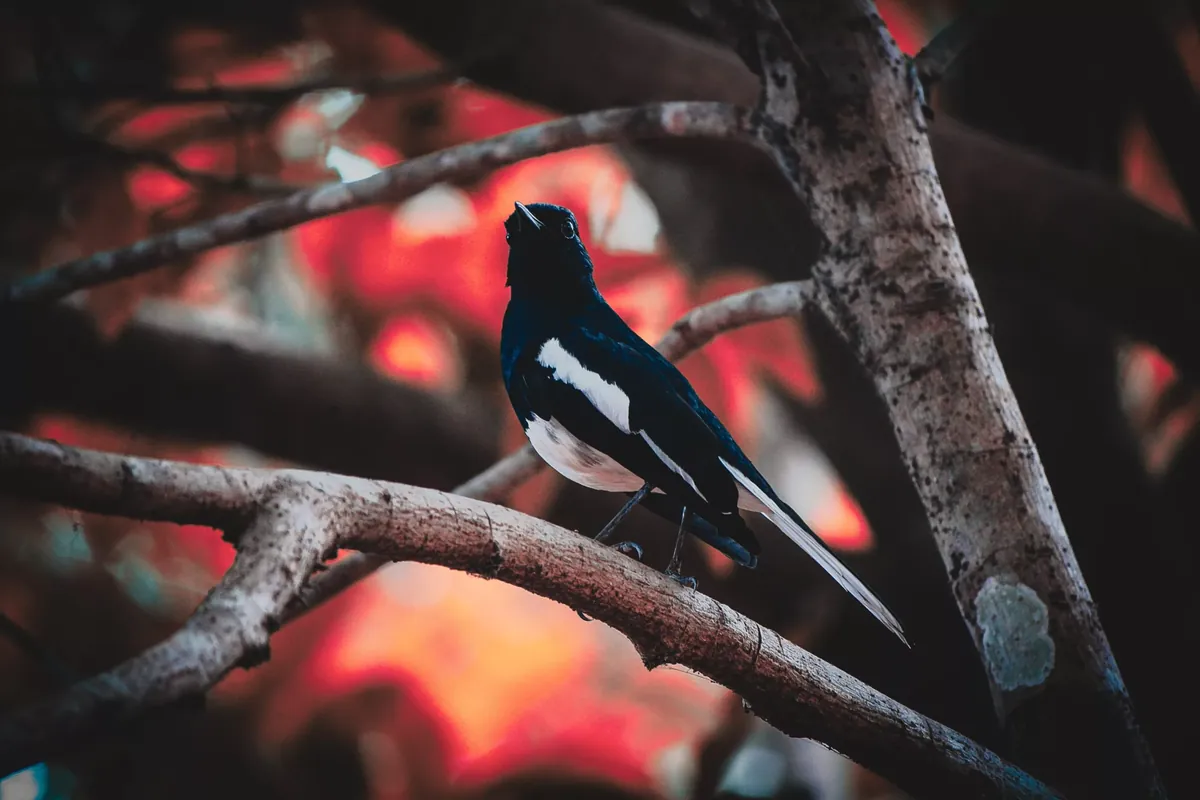
Magpies have glossy black-and-white plumage with an iridescent blue-green sheen on the wings and tail; males and females look essentially alike, though males tend to be slightly larger with longer tails.
A magpie's long, wedge-shaped tail can make up roughly half of its total body length and helps it balance and steer in flight.
A group of magpies is called a 'tiding,' 'gulp,' 'mischief,' or 'conventicle' - not a 'parliament' or 'tower' (those terms belong to owls and giraffes/flamingos).
Magpies are largely monogamous and often pair with the same mate for multiple breeding seasons.
During breeding season, magpies build large, domed nests of twigs with a roof and a mud-lined cup inside, often reusing or rebuilding on the same site for years.
In a 2008 study, two magpies appeared to recognize themselves in a mirror by trying to remove a mark visible only in their reflection - a rare feat outside mammals - though a later, larger replication study failed to confirm the result, so the finding remains debated among scientists.
Magpies have a wide vocal repertoire, including chattering calls, alarm rattles, and softer subsong used in social interactions.
Magpies are territorial and will aggressively defend their nesting area from other birds, especially during breeding season.
Contrary to popular belief, controlled studies found no evidence that magpies are attracted to shiny objects - in tests, wild magpies mostly avoided shiny items, a response consistent with general wariness of new objects rather than any special love of glitter.
Like other corvids, magpies cache food for later and can remember large numbers of hiding spots.
Wild magpies typically face high early mortality, but banded individuals have been recorded living past 15-20 years, with a UK record of over 21 years for a ringed bird.
Magpies live in complex social groups with dominance hierarchies, particularly among non-breeding flocks of younger birds.
Magpie symbolism varies widely by culture: in much of Western European folklore a lone magpie has historically been considered unlucky ('one for sorrow'), while in Chinese culture the magpie is a symbol of joy and good fortune.
Magpies are adaptable and thrive in urban and suburban environments as readily as in open woodland and farmland.
In the UK, magpies are a protected species under the Wildlife and Countryside Act 1981, though general licenses allow limited control in specific circumstances such as protecting other wildlife.
As both predators of small animals' eggs and young and prey for birds of prey, magpies play a role in local food webs.
Magpies appear throughout art, literature, and folklore, from European nursery rhymes to Rossini's opera 'La Gazza Ladra' ('The Thieving Magpie').
In Chinese folklore, magpies are said to form a bridge across the Milky Way once a year so the separated lovers Zhinu and Niulang can reunite - the basis of the Qixi Festival legend.
Frequently asked questions
How can you tell the difference between male and female magpies?
Male and female magpies look nearly identical in plumage. The main difference is size: males are typically slightly larger and have proportionally longer tails than females.
What is the lifespan of magpies in captivity?
With consistent food and veterinary care, captive magpies can live into their 20s, sometimes longer, well beyond the survival odds of wild birds.
Do magpies migrate?
No, magpies are generally non-migratory and sedentary, though young or displaced birds may move short distances to find food or territory.
Are magpies aggressive towards other birds?
Magpies will defend their nest and territory, especially during breeding season, but they aren't known for the aggressive 'swooping' at people associated with the unrelated Australian magpie.
Do magpies have any predators?
Adult magpies are preyed on by larger raptors like hawks and owls, while eggs and chicks are vulnerable to foxes, cats, and other nest predators.
What is the significance of magpies in Chinese culture?
In Chinese culture, magpies symbolize joy, good luck, and reunion, most famously in the legend of the magpie bridge that reunites two separated lovers once a year.
We write every article to be genuinely fun — and genuinely true. Each fact is checked against reputable sources before it goes live. Spotted something off? Tell us and read our fact-check policy.