FFacts On Tap Editorial Team Fact-checkedUpdated July 30, 20233 min read
Share
With their orange-red breast and cheerful song, robins are one of the most familiar birds in North American backyards, especially come spring. But there's more to this common thrush than meets the eye.
Here are fascinating, fact-checked facts about the American Robin that you may not know.
Robins are part of the thrush family (Turdidae), which also includes bluebirds.
The American Robin is the state bird of Connecticut, Michigan, and Wisconsin.
The scientific name for the American Robin is Turdus migratorius.
Robins are migratory birds; northern populations travel south for winter, with recovery data showing many robins migrate several hundred miles, and some traveling over a thousand miles between breeding and wintering grounds.
They have a varied diet that includes earthworms, insects, fruits, and berries.
The average lifespan of a wild robin is about 2 years, largely due to high mortality in their first year, but robins that survive to adulthood can live considerably longer.
Robins are generally monogamous within a breeding season and are territorial birds, especially during nesting.
The male robin's song is used to attract a mate and defend his territory.
They build cup-shaped nests out of grass and twigs, reinforced with mud, and line them with soft material.
Robins can raise up to three broods of chicks in a single breeding season.
Like many birds, robins can see ultraviolet light, which may help them spot food such as berries and insects.
Female robins lay pale blue eggs (often called 'robin's egg blue') and incubate them for about 12 to 14 days.
Baby robins hatch featherless and with their eyes closed, completely dependent on their parents.
Robins often find worms by sight and by tilting their heads to watch and listen for movement in the soil.
They have a distinctive hop-and-pause motion when moving across the ground.
American Robins are found throughout most of North America, breeding from Alaska and Canada south into Mexico, with some wintering as far south as Guatemala.
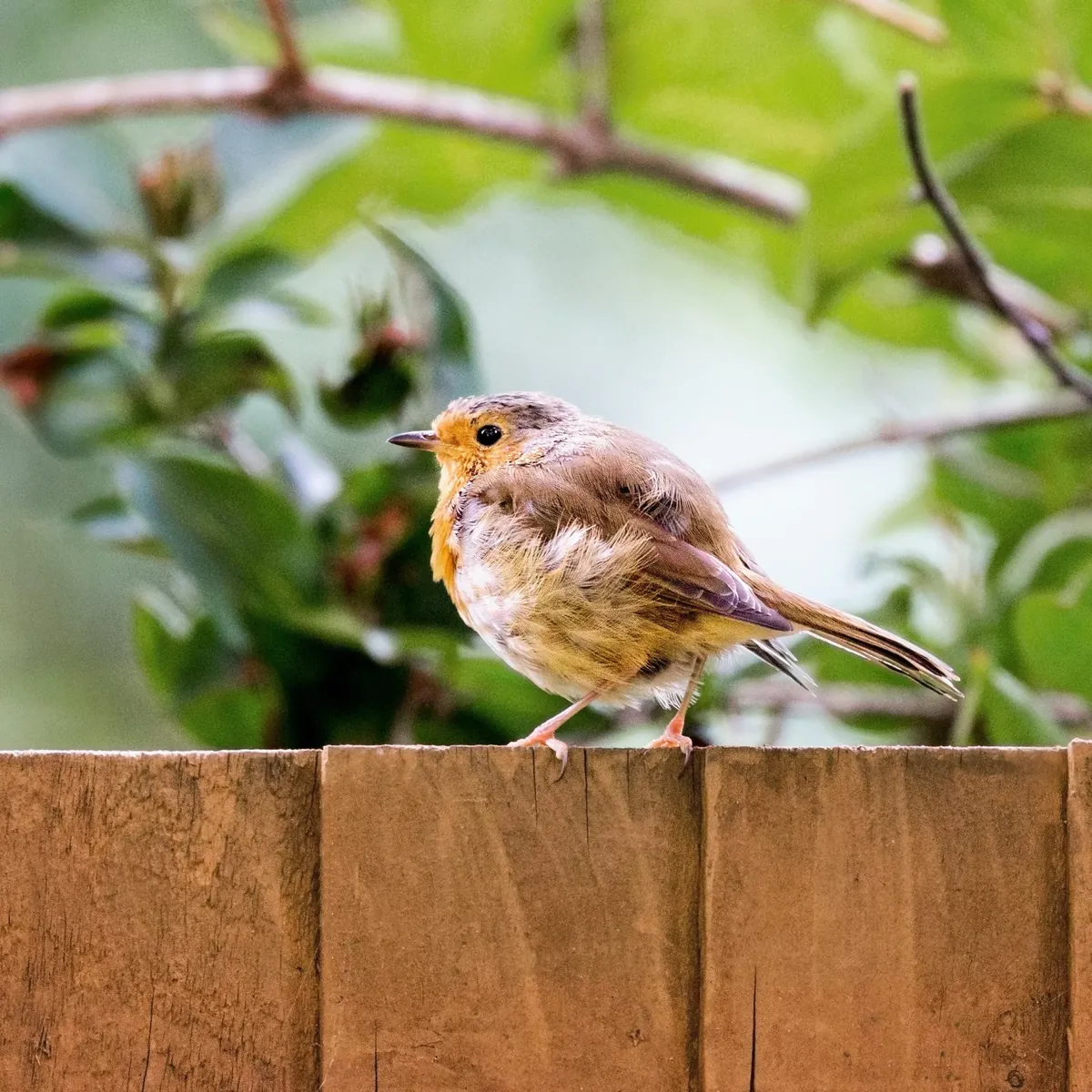
The similarly named European Robin is a completely different, unrelated species found in Europe, not a variety of the American Robin.
Robins can fly at speeds estimated around 20 to 35 miles per hour.
The oldest known wild American Robin on record lived to be about 13 years and 11 months old.
The robin's breast is actually more orange than red, colored by carotenoid pigments the bird absorbs from its diet.
Robins are a widely recognized symbol of spring in North America, often associated with renewal and new beginnings.
Frequently asked questions
What is the robin's scientific name?
The scientific name for the American Robin is Turdus migratorius.
What do robins eat?
Robins have a varied diet of earthworms, insects, fruits, and berries, shifting more toward fruit in colder months.
How many broods of chicks can robins have in a year?
Robins can raise up to three broods of chicks in a single breeding season.
Where are robins found?
American Robins are found throughout North America, breeding from Alaska and Canada south into Mexico. They are not found in Europe, Asia, or Africa; the similarly named European Robin is a different, unrelated species native to Europe.
What is the lifespan of a robin?
The average lifespan of a wild robin is about 2 years due to high early mortality, though the oldest known wild robin lived nearly 14 years.
Is a robin's breast really red?
It's usually described as red, but the color is actually closer to orange, produced by carotenoid pigments from the robin's diet.
We write every article to be genuinely fun — and genuinely true. Each fact is checked against reputable sources before it goes live. Spotted something off? Tell us and read our fact-check policy.